Disclaimer: Churn reduction strategies vary by business model, customer segment, and product type. Test these strategies with your specific audience before full deployment.
Quick Answer
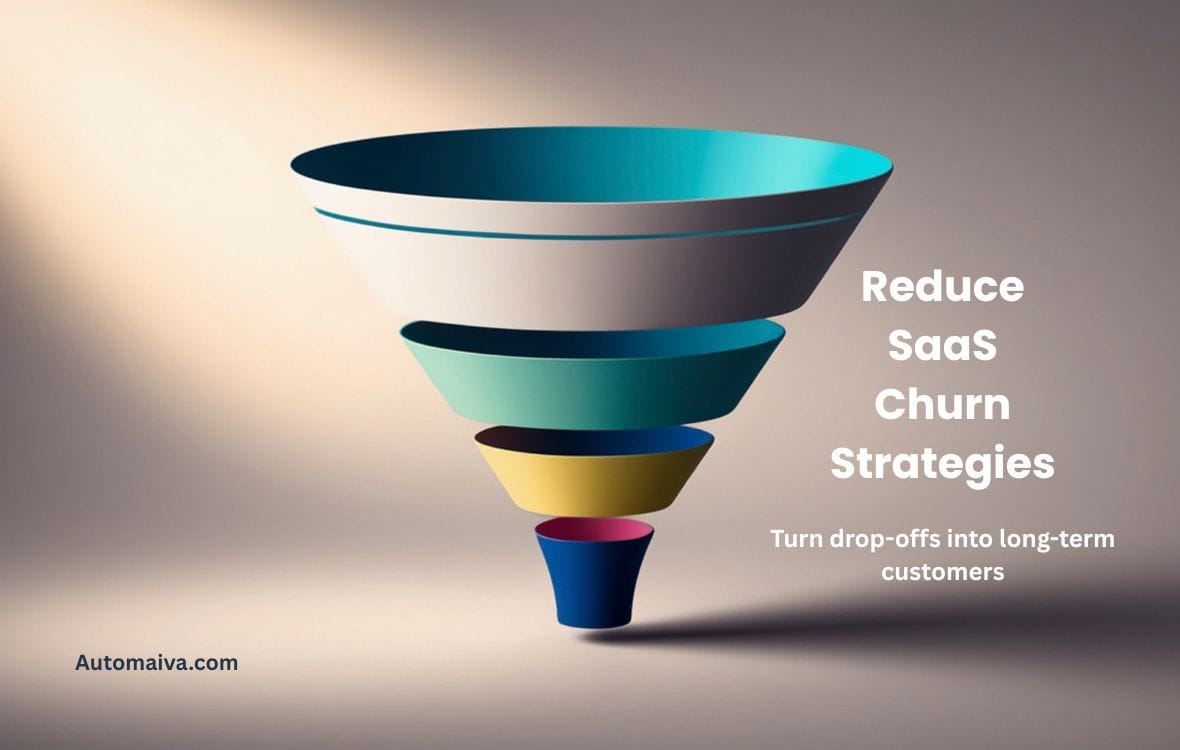
To reduce SaaS churn, focus on five levers: fix onboarding (the first 30 days predict the next 12 months), improve customer support response times, optimize pricing and packaging, build product stickiness through features that create switching costs, and communicate proactively before customers cancel. Companies that implement all five see churn drop from 5% to under 2% within 6-12 months. Start with onboarding—it gives the fastest ROI.
If you are searching for how to reduce customer churn, you probably feel the pain. Customers leave. Revenue leaks. You work harder and harder just to stay in place.
I have seen this pattern with dozens of SaaS founders. They focus all their energy on acquisition. They ignore retention. Then they wonder why growth feels like running up a down escalator.
This guide gives you 5 proven saas churn reduction strategies that actually work. No theory. No fluff. Just actionable steps you can implement this week.
Table of Contents
- Why Churn Kills SaaS Companies
- Strategy 1: Fix Onboarding (The First 30 Days)
- Strategy 2: Improve Customer Support Response Times
- Strategy 3: Optimize Pricing and Packaging
- Strategy 4: Build Product Stickiness
- Strategy 5: Proactive Customer Communication
- Churn Reduction by Stage
- Churn Metrics to Track
- Common Churn Mistakes
- Frequently Asked Questions
Why Churn Kills SaaS Companies
Let me show you the math.
Imagine two SaaS companies. Both start with $100,000 MRR. Both grow new MRR at 10% per month.
Company A has 2% monthly churn. Company B has 5% monthly churn.
After 12 months:
- Company A grows to $310,000 MRR
- Company B grows to $170,000 MRR
The difference? $140,000 per month in lost revenue. That is $1.68 million per year.
Churn is not just lost revenue. It is wasted acquisition spend. Every customer who leaves took time and money to acquire. When they churn, that investment disappears.
According to industry research, reducing churn from 5% to 2% doubles customer lifetime value. This is the highest ROI activity for most SaaS companies.
Now let me show you exactly how to reduce SaaS churn with five proven strategies.
Strategy 1: Fix Onboarding (The First 30 Days)
The first 30 days predict the next 12 months. If users do not see value quickly, they will leave. Research shows that 40-50% of churn happens because customers do not see value.
What to do:
1. Reduce time to first value.
How long from signup to first “aha” moment? If it takes 3 days, you will lose 50% of trials. If it takes 3 minutes, you will keep them.
Examples:
- Canva: First design in 60 seconds
- Calendly: First booking in 2 minutes
- Slack: First message in 30 seconds
2. Create an onboarding checklist.
Show users exactly what to do. Track completion. Follow up when they get stuck. Companies with onboarding checklists see 30-40% higher activation rates.
3. Send targeted onboarding emails.
Do not send the same email to everyone. Segment by actions taken. If they completed step 1 but not step 2, send a helpful tip for step 2.
4. Use in-app guidance, not just emails.
Tooltips, walkthroughs, and banners inside your product are more effective than email. Users are already in your product. Guide them there.
For more on email automation, see our email marketing tools guide.
Strategy 2: Improve Customer Support Response Times
Poor customer support causes 20-30% of churn. Customers leave not because your product is bad, but because they felt ignored when they had a problem.
What to do:
1. Set response time SLAs.
Respond to all support tickets within 24 hours. Better yet, within 4 hours for critical issues. Customers who receive fast responses are 3x less likely to churn.
2. Add self-service options.
Knowledge bases, FAQs, and chatbots reduce support volume. Customers who find answers themselves are happier than those who wait for a human.
3. Track support metrics.
Monitor first response time, resolution time, and customer satisfaction score. Set targets. Improve weekly.
4. Close the loop.
When a customer reports a bug or requests a feature, follow up when it is fixed or added. This turns frustrated customers into loyal advocates.
If you are evaluating support tools, see our AI tools guide for support automation options.
Strategy 3: Optimize Pricing and Packaging
Price and billing issues cause 15-20% of churn. Customers leave because they feel overcharged, or because they signed up for a plan that no longer fits.
What to do:
1. Offer annual plans with discounts.
Annual plans reduce involuntary churn (credit card expirations) and improve cash flow. Offer a 15-20% discount for annual commitment.
2. Create clear upgrade paths.
Customers should see exactly what they get at each pricing tier. Make it easy to upgrade when they need more features.
3. Handle failed payments gracefully.
Use dunning emails to recover failed payments. Retry failed charges multiple times. Send friendly reminders before canceling accounts. This recovers 20-30% of “involuntary churn.”
4. Let customers downgrade, not cancel.
When someone tries to cancel, offer a cheaper plan as an alternative. Many customers want to stay but cannot afford the current price.
For more on pricing, see our SaaS pricing models guide.
Strategy 4: Build Product Stickiness
Product stickiness is what makes customers stay even when they consider leaving. It comes from features that create switching costs.
What to do:
1. Enable data imports and exports.
The more data customers have in your system, the harder it is to leave. Make imports easy. Do not block exports—that creates bad will.
2. Build integrations with other tools.
When your product connects to their CRM, email, and analytics, leaving means breaking those connections. This creates natural stickiness.
3. Create templates and workflows.
If customers build custom templates, reports, or automations in your product, they are less likely to leave. They have invested time and effort.
4. Add collaboration features.
When multiple team members use your product, switching costs multiply. A tool used by 5 people is harder to replace than a tool used by 1.
For workflow automation that increases stickiness, see our workflow automation tools guide.
Strategy 5: Proactive Customer Communication
Do not wait for customers to cancel. Reach out before they leave. Proactive communication can prevent 30-40% of cancellations.
What to do:
1. Identify at-risk customers.
Track usage signals: logins, feature adoption, support tickets. Customers who stop using your product are at high risk of churn.
2. Send re-engagement campaigns.
When a customer goes quiet, send a helpful email. “We noticed you haven’t used feature X. Here is a tutorial.” Do not send “we miss you” emails—send value.
3. Conduct exit interviews.
When customers cancel, ask why. Record every answer. Look for patterns. Fix the top 3 reasons.
4. Win back churned customers.
Send a win-back email 30-60 days after cancellation. Offer a discount or free month. 10-15% of churned customers will return with the right offer.
For churn tracking tools, see our SaaS metrics dashboard guide.
Churn Reduction by Stage
| Stage | Focus On | Ignore (For Now) |
|---|---|---|
| Seed (0-10 customers) | Onboarding, exit interviews | Advanced analytics, dunning automation |
| Series A (10-100 customers) | Support response, pricing optimization | AI support, complex retention modeling |
| Series B (100+ customers) | Product stickiness, proactive communication | — |
Churn Metrics to Track
You cannot improve what you do not measure. Track these metrics weekly:
| Metric | Formula | Target |
|---|---|---|
| Gross Revenue Churn | (Churned MRR + Downgrade MRR) / Starting MRR | Under 2% |
| Logo Churn | Customers lost / Total customers | Under 3% |
| Net Revenue Retention | (Starting MRR + Expansion – Churn) / Starting MRR | Above 100% |
| Activation Rate | Users who hit key milestone / Total signups | Above 40% |
For more on metrics, see our SaaS Metrics 101 guide.
Common Churn Mistakes
Mistake 1: Focusing only on logo churn, not revenue churn.
Losing 10 small customers hurts less than losing 1 large customer. Track revenue churn, not just customer count.
Mistake 2: Ignoring churn until it is too late.
By the time you notice high churn, you have already lost customers. Track churn weekly. Investigate spikes immediately.
Mistake 3: Not interviewing churned customers.
You cannot fix what you do not understand. Call every customer who cancels. Ask why. Record every answer.
Mistake 4: Fixing the wrong problem.
If 80% of churn is due to poor onboarding, but you invest in better support, you waste time. Fix the biggest problem first.
More from Automaiva
Frequently Asked Questions
What is a good churn rate for a SaaS startup?
For early-stage SaaS (under $10M ARR), monthly churn under 2% is healthy. Under 1% is excellent. Over 3% is concerning and needs immediate attention.
How can I reduce churn without spending money?
Talk to customers who cancel. Ask why. Fix the top 3 reasons. Improve onboarding emails. Send check-in emails after 7, 14, and 30 days. Most churn fixes do not require new tools—they require listening to customers.
What is the fastest way to reduce SaaS churn?
Fix onboarding. The first 30 days predict the next 12 months. Reduce time to first value. Add an onboarding checklist. Send targeted emails. This gives the fastest ROI.
How do I calculate churn rate?
Monthly churn = (Customers lost this month / Total customers at start of month) × 100. For revenue churn, use MRR instead of customer count.
What is the difference between gross churn and net churn?
Gross churn only counts cancellations and downgrades. Net churn includes expansion revenue. Net churn can be negative (below 0%) if expansion exceeds churn.
How often should I review churn?
Weekly. Monthly is too slow to catch problems. Daily causes unnecessary anxiety. Weekly is the sweet spot.
Final Thoughts
To reduce SaaS churn, you do not need to do everything at once.
Start with onboarding. It gives the fastest ROI. Then improve support response times. Then optimize pricing. Then build stickiness. Then add proactive communication.
Track your metrics weekly. Interview every churned customer. Fix the biggest problem first.
Remember: reducing churn from 5% to 2% doubles customer lifetime value. That is the highest ROI activity for most SaaS companies.
Start today. Your future self will thank you.
Written by the Automaiva Editorial Team