Updated: April 12, 2026
Disclaimer: Tool pricing, features, and availability are subject to change. This article reflects independent research and opinions based on publicly available information as of April 2026. Always verify current pricing and features directly with each vendor before making a purchase decision. This content is for informational purposes only and does not constitute professional advice.
Editorial Note: This article contains affiliate links. We only recommend tools we have researched. If you purchase through these links, we may earn a commission at no extra cost to you.
Quick Answer
Choosing between Zapier vs Make vs n8n for SaaS startups comes down to three factors: Zapier is easiest to use but most expensive at scale. Make offers the best balance of power and price (60-80% cheaper than Zapier). n8n is cheapest (free self-hosted) but requires technical skills. Start with Zapier for simple automations, switch to Make for complex workflows, and choose n8n if you have a technical team.
Table of Contents
- The Day Your Zapier Bill Hit $500
- Quick Comparison: Zapier vs Make vs n8n
- Make – Best for Complex Workflows
- n8n – Best for Developers & Full Control
- Zapier – Best for Simple Automations
- Detailed Feature Comparison
- Real-World Pricing Comparison
- Decision Framework: Which One Should You Choose?
- What to Use at Each Stage (Seed to Series B)
- How to Migrate from Zapier (Step by Step)
- Frequently Asked Questions
The Day Your Zapier Bill Hit $500
You remember the moment. Maybe it was month six. Your startup had finally found product-market fit. Leads were flowing. Your automations were humming. Then the Zapier invoice arrived: $487 for the month. For tasks you thought were “free.”
Choosing between automation tools like Zapier, Make, and n8n has become a key decision for SaaS startups as costs and workflow complexity increase.
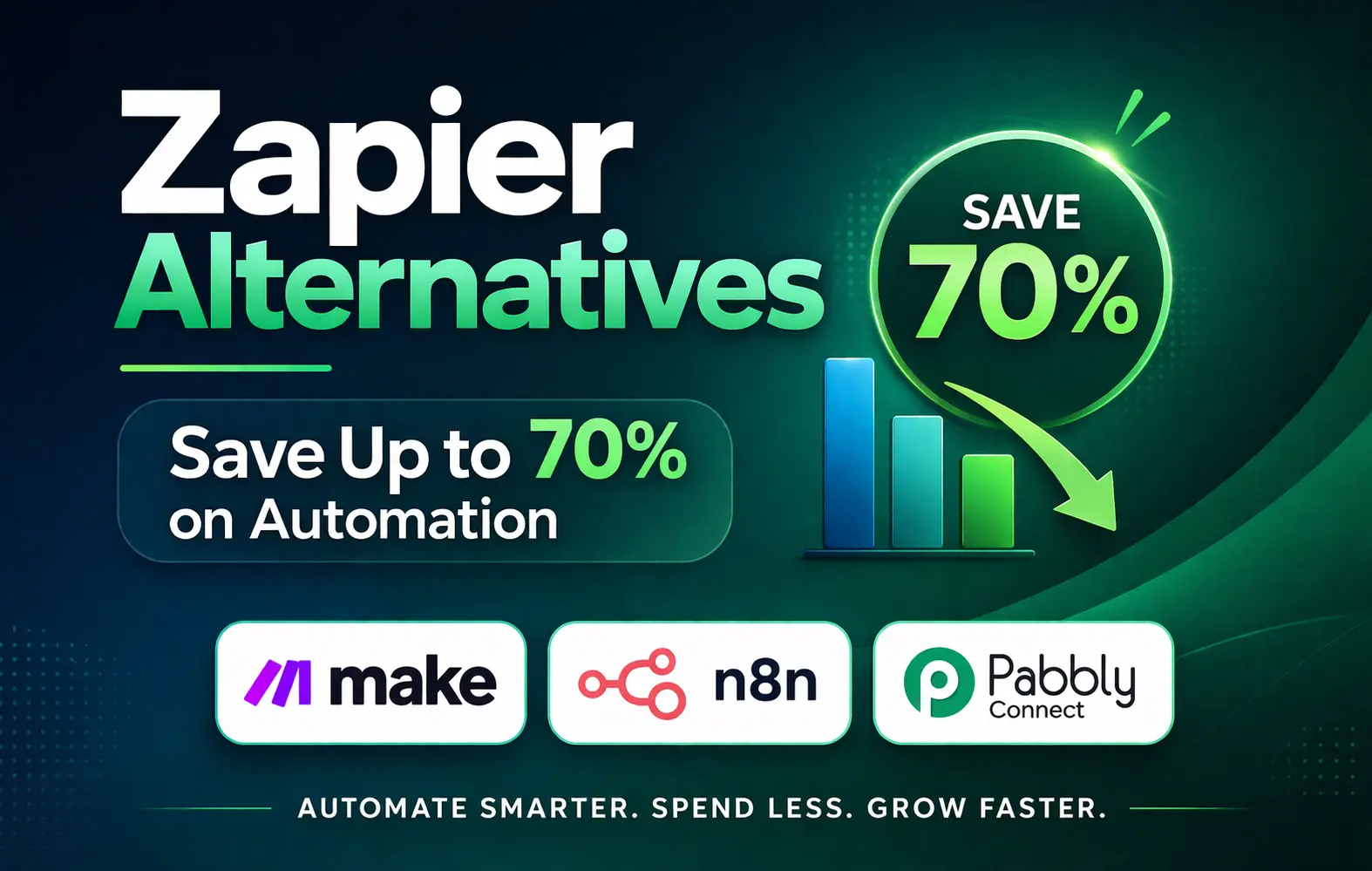
The good news? Tools like Make and n8n offer more flexibility, lower costs, and better scalability depending on your needs. Each tool offers different advantages — from simplicity and integrations to flexibility and cost control. In 2026, many have matured enough to handle complex SaaS workflows without the enterprise price tag.
Based on our testing and conversations with SaaS founders who have made the switch, we have compared the three most widely used automation platforms — Zapier, Make, and n8n — based on pricing, flexibility, and real SaaS use cases.
Quick Comparison: Zapier vs Make vs n8n for SaaS Startups
| Tool | Best For | Ease of Use | Pricing Model | Typical Monthly Cost | Key Difference |
|---|---|---|---|---|---|
| Zapier | Quick, simple connections | Very easy | Usage-based (tasks) | $100–$500 | Largest integration library |
| Make | Complex, visual workflows | Moderate | Operation-based | $20–$80 | 60-80% cheaper than Zapier |
| n8n | Developer teams, full control | Technical | Self-hosted free / cloud | $0–$50 | Open-source, unlimited operations |
When comparing Zapier vs Make vs n8n for SaaS startups, pricing and workflow complexity are usually the biggest deciding factors.
Make – Best for Complex Workflows
What it does: Make offers a visual drag-and-drop builder for multi-step automations with branching logic, filters, and data transformation. Unlike Zapier’s linear “if this, then that” structure, Make lets you build complex scenarios with multiple paths.
Why choose Make over Zapier: The pricing model is operation-based, not task-based. A single Zapier “task” might be one operation; in Make, complex workflows cost significantly less. For SaaS teams with conditional logic needs, Make is typically 60-80% cheaper.
SaaS use case: A trial user reaches day 7. Make checks if they have completed onboarding. If yes, send upgrade email. If no, send tutorial. If still inactive by day 14, notify sales. This one workflow in Zapier would count as 3-5 tasks per execution. In Make, it is one operation.
Pricing: Free for 1,000 operations per month; paid from $10.56 per month for 10,000 operations.
Limitation: The visual builder has a steeper learning curve than Zapier. For simple automations, Zapier is still faster to set up.
When to choose Make: You need conditional logic, multi-step branching, or complex data transformations — and you want to save money while doing it.
n8n – Best for Developers & Full Control
What it does: n8n is an open-source automation platform you can self-host or use in the cloud. It gives you complete control over your data, infrastructure, and costs.
Why choose n8n over Zapier: No per-operation fees. No surprise bills. If you self-host, your only cost is server hosting (as low as $5–$20 per month). You can run unlimited automations without watching your usage counter.
SaaS use case: You need to sync user data from your product database to internal analytics tools, Slack, and support systems — without exposing customer data to third-party clouds. n8n lets you keep everything within your own infrastructure.
Pricing: Free self-hosted (just hosting costs); cloud plans from €20 per month.
Limitation: Requires technical expertise to set up and maintain, especially for self-hosted deployments. Not ideal for non-technical founders.
When to choose n8n: You have a technical team, care about data privacy, and want unlimited automation at minimal cost.
Zapier – Best for Simple Automations
What it does: Zapier connects apps using simple “if this, then that” workflows.
Best for: SaaS startups that need quick integrations without technical setup.
Pricing: Starts at about $19.99 per month, but costs increase significantly with usage.
Limitation: Expensive at scale due to task-based pricing.
Detailed Feature Comparison
| Feature | Zapier | Make | n8n |
|---|---|---|---|
| Visual workflow builder | Basic (linear) | Advanced (branching, loops) | Advanced (code nodes) |
| Conditional logic (if/else) | Yes (Filters) | Yes (Routers) | Yes (If node) |
| Number of integrations | 7,000+ | 1,000+ | 400+ |
| Data transformation | Limited (Formatters) | Advanced (Functions) | Full (Code node) |
| Self-hosted option | No | No | Yes (free) |
| Error handling | Basic | Advanced (retry, error routes) | Full (wait, retry) |
Real-World Pricing Comparison
| Scenario | Zapier Cost | Make Cost | n8n Cost | Savings vs Zapier |
|---|---|---|---|---|
| 10 simple automations, 1,000 tasks/month | $30 | $20 | $0-10 (self-hosted) | 30-100% |
| 1 complex workflow, 5,000 operations/month | $100 | $30 | $0-10 (self-hosted) | 70-100% |
| 50 workflows, unlimited operations | $500+ | $80 | $0-20 (self-hosted) | 84-100% |
Decision Framework: Which One Should You Choose?
Choose Zapier if: You want simplicity and have simple automations. It is the easiest to set up and has the largest integration library. Best for early-stage startups with basic automation needs.
Choose Make if: You need complex workflows with conditional logic and branching. It offers the best balance of power and price. Best for growing SaaS teams with 10 to 100 customers.
Choose n8n if: You have a technical team and want unlimited automation at minimal cost. Self-hosted n8n costs $0-20 per month for hosting. Best for developer-focused SaaS startups.
What to Use at Each Stage (Seed to Series B)
| Stage | Recommended Tool | Why |
|---|---|---|
| Seed (0-10 customers) | Zapier (free tier) | Simple setup, no technical overhead |
| Series A (10-100 customers) | Make | Complex workflows, 60-80% cheaper |
| Series B (100+ customers) | n8n (self-hosted) | Unlimited operations, full control |
How to Migrate from Zapier (Step by Step)
Step 1: Audit your current Zapier usage. Log into Zapier. Look at your task usage history. Identify which zaps consume the most tasks. These are your migration priorities.
Step 2: Pick one alternative. Based on the decision framework above, choose one tool to test first. Do not try to migrate everything at once.
Step 3: Rebuild one non-critical workflow. Start with a low-risk automation. For example, an internal Slack notification or a simple lead capture. Rebuild it in your new tool.
Step 4: Run both in parallel. Keep the original Zapier zap active. Run your new workflow alongside it for 3-5 days. Compare outputs. Make sure they match.
Step 5: Turn off the Zapier version. Once you confirm the new workflow works correctly, turn off the Zapier zap. Do not delete it yet — keep it as a backup for one week.
Step 6: Repeat for critical workflows. Migrate your most important automations one by one. Test each thoroughly before moving to the next.
Step 7: Delete Zapier zaps and downgrade your plan. After one week with no issues, delete the old zaps and downgrade your Zapier plan to free or cancel.
More from Automaiva
Frequently Asked Questions: Zapier vs Make vs n8n for SaaS Startups
Is there a completely free Zapier alternative?
Yes. n8n is an open-source automation platform that can be self-hosted for free. You only pay for server hosting (as low as $5-20 per month). Zapier and Make offer limited free plans suitable for early-stage startups.
Can I use multiple automation tools together?
Absolutely. Many SaaS teams use Zapier for simple connections and Make for complex workflows. They can trigger each other through webhooks if needed.
Will switching from Zapier break my existing workflows?
It can, if not done carefully. Migrate one workflow at a time and test thoroughly before deactivating the original. Most alternatives offer import tools or similar logic structures. Start with non-critical workflows first.
Which Zapier alternative is best for a non-technical founder?
Make has a visual builder but a learning curve. Zapier is the easiest for beginners. n8n is best only if you have technical skills.
How much can I actually save by switching from Zapier?
For a SaaS startup with 20-50 automations, switching from Zapier to Make or n8n can reduce costs by 60-95%. For complex workflows, moving to Make saves 60-80%. For high-volume startups willing to self-host, n8n can reduce costs by 95% or more.
What is the difference between Zapier tasks and Make operations?
A Zapier task is each action in a workflow (send email, create contact, etc.). A Make operation is similar but Make counts differently for complex workflows. A single Zapier complex workflow might cost 3-5 tasks per run, while Make charges 1 operation. This is why Make is 60-80% cheaper.
Final Thoughts
Zapier changed the game for no-code automation. But for SaaS startups, the pricing model does not always align with growth.
When comparing Zapier vs Make vs n8n for SaaS startups, the best choice depends on your stage:
- Start with Zapier for simplicity
- Switch to Make when you need complex workflows and want to save 60-80%
- Move to n8n if you have technical skills and want unlimited automation at minimal cost
Start by auditing your current Zapier usage. Identify the workflows costing you the most. Then pick one alternative from this guide that matches your technical comfort and budget. Migrate one workflow. Test it. Let it run for a week. Then decide if you want to move more.
You did not start a SaaS company to watch your automation bill grow faster than your revenue. With the right automation tool, you can balance cost, flexibility, and scalability as your SaaS grows.
Written by the Automaiva Editorial Team
Automaiva publishes honest, research-backed guides on automation tools, SaaS platforms, and workflow systems. We test tools with real founders so you do not have to.